South Dakota State University Team Wins NASA’s Gateways to Blue Skies Competition with Augmented Reality Aircraft Maintenance Solution
NASA’s Gateways to Blue Skies Competition: Addressing Aviation Maintenance Challenges
NASA has announced the winners of its fifth annual Gateways to Blue Skies competition, a university-focused event that challenges student teams to develop innovative solutions for critical issues in U.S. aviation. This year’s competition, themed “RepAir: Advancing Aircraft Maintenance,” called on postsecondary students to propose advanced systems and practices that could revolutionize commercial aircraft maintenance and repair operations by the year 2035. The initiative is sponsored by NASA’s University Innovation project, part of the agency’s Aeronautics Research Mission Directorate, aimed at fostering innovative research and strengthening the future aviation workforce.
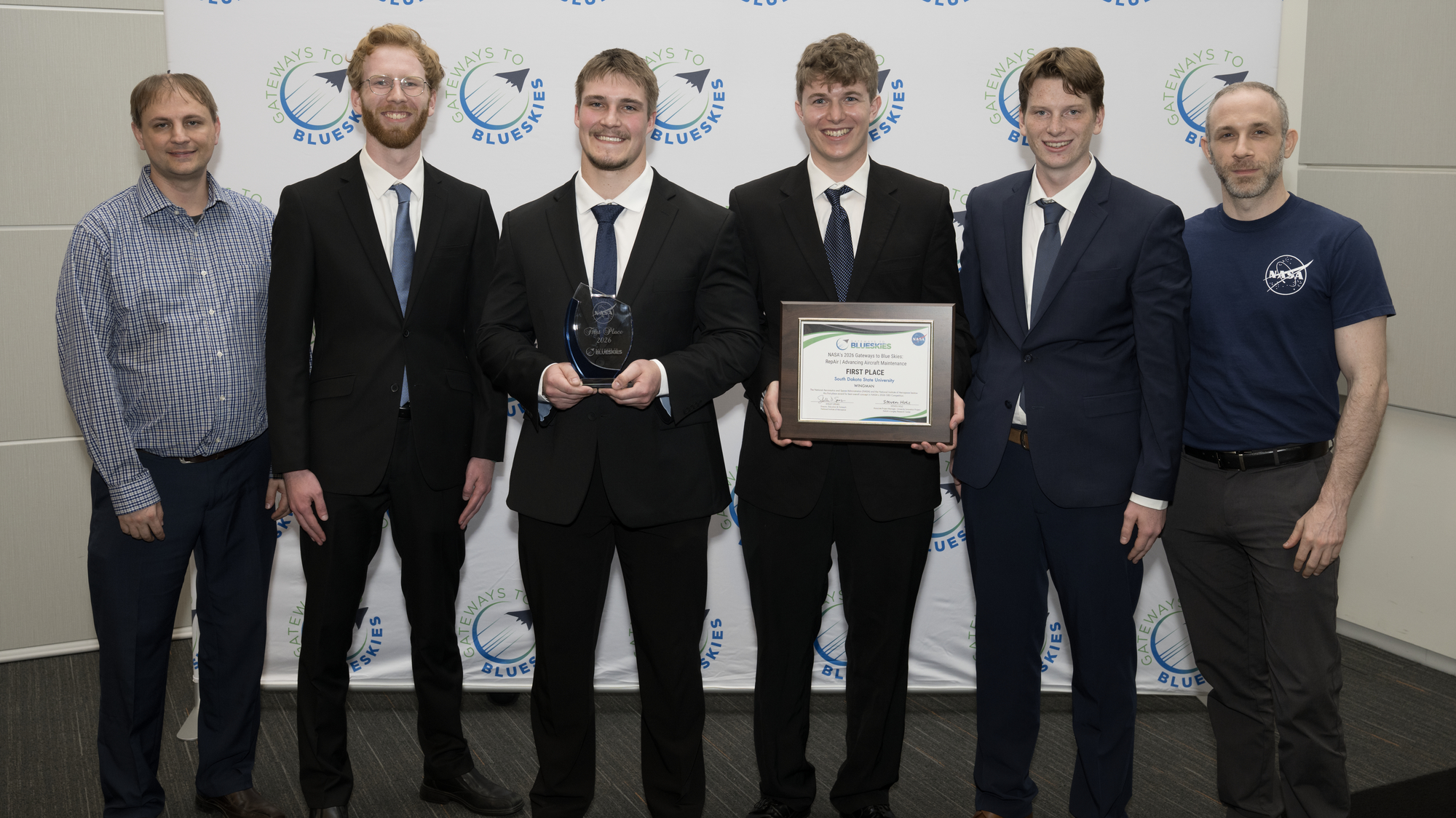
The competition concluded with the South Dakota State University team, WINGMAN, taking first place. The team presented a groundbreaking concept using augmented reality (AR) safety glasses to assist aircraft mechanics during routine daily servicing and minor repairs. Their project, also named WINGMAN, was unveiled at the Gateways to Blue Skies Forum held at NASA’s Langley Research Center in Hampton, Virginia, on May 18 and 19, 2026.
The Winning Solution: WINGMAN Augmented Reality Glasses
The WINGMAN project proposed a pair of augmented reality safety glasses equipped with voice-controlled manuals, automatic documentation, and photo recognition capabilities. These glasses would function as a mechanic’s “wingman,” providing hands-free access to the information and reporting mechanisms needed for line inspections. By allowing mechanics to keep their hands free while accessing technical data, the system aims to improve efficiency and safety in aircraft maintenance.
Key features of the WINGMAN system include:
- Voice-controlled manuals: Mechanics can verbally request specific procedures or diagrams without pausing their work.
- Automatic documentation: The glasses record maintenance actions and generate reports automatically, reducing paperwork.
- Photo recognition: The system can identify parts or damage through the camera, linking to relevant repair information.
The team behind WINGMAN consisted of students Matthew Wieberdink, Owen Diede, Christian Lee, and Anders Olsen, advised by Todd Letcher. They presented their research alongside eight other finalist teams at the forum, which was livestreamed and recorded.
Forum and Judging Process
The Gateways to Blue Skies Forum provided a platform for finalist teams to present their concepts to a panel of subject matter experts from NASA, the Federal Aviation Administration (FAA), and industry, including representatives from Southwest Airlines and American Airlines. The judging panel was chaired by Steven Holz, associate project manager for NASA’s University Innovation Project. Holz emphasized the importance of the competition in addressing modern aviation challenges, stating, “This year’s finalists proposed novel ideas to equip companies and their workers with innovative technologies to help keep our nation’s planes airworthy. This is especially critical in a time where flight safety is more commonly in the spotlight and where workforce shortages lead to challenges and opportunities in aviation.”

During the two-day event, students had the opportunity to network with NASA and industry experts, tour the Langley Research Center, and gain insight into potential careers in aeronautics. The forum also allowed participants to receive feedback from judges, helping them refine their ideas for real-world implementation.
Award and Opportunities for Winners
As the first-place winners, the WINGMAN team members will have the opportunity to intern at one of NASA’s four aeronautics research centers during the 2026-2027 academic year. Options include NASA’s Langley Research Center in Virginia, the Glenn Research Center in Ohio, and other centers dedicated to aeronautics research. This internship provides valuable hands-on experience and a direct pathway into the aerospace workforce.
The competition, part of NASA’s broader effort to cultivate the next generation of aviation professionals, highlights the agency’s commitment to advancing maintenance technologies and ensuring the safety of the U.S. aircraft fleet. The winning team’s innovative use of augmented reality could serve as a model for future maintenance practices in the aviation industry.
Broader Impact on Aviation Maintenance
The RepAir challenge specifically targeted improvements that could be implemented by 2035, addressing both technological advancements and workforce development. With the aviation industry facing a shortage of skilled mechanics, solutions like WINGMAN that enhance efficiency and reduce errors are critical. By using AR to streamline maintenance workflows, the project could help airlines manage increased demand while maintaining high safety standards.
The success of the WINGMAN team demonstrates the potential of university-led research in solving real-world problems. NASA plans to continue the Gateways to Blue Skies competition, encouraging more student teams to tackle pressing issues in aeronautics. The agency’s University Innovation project remains a key driver of innovative research and workforce pipelines.