HashiCorp Vault Unveils Native AI Agent Security Controls to Address Autonomous Authorization Challenges
Breaking News: HashiCorp Vault Announces Native AI Agent Support
HashiCorp today announced native AI agent support for its Vault secrets management platform, introducing new identity and security controls designed specifically for autonomous, non-deterministic systems. The update includes an agent registry, granular identity-based policies, and per-request ephemeral authorization to reduce risk in AI workflows.
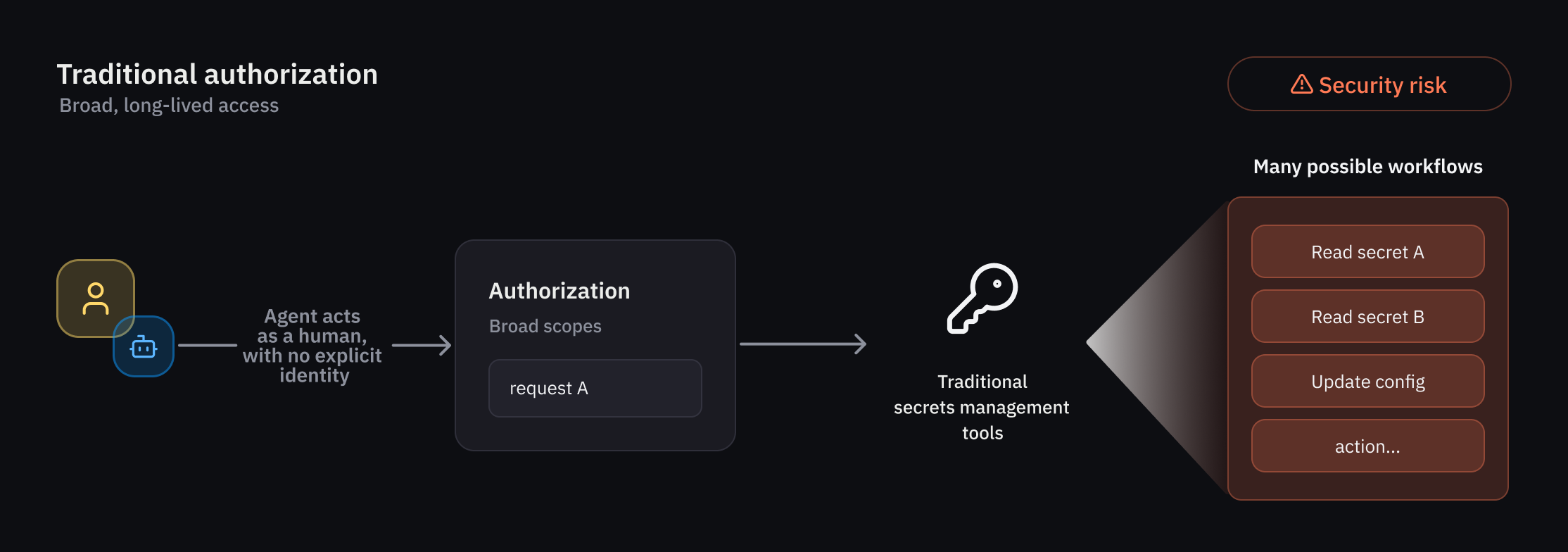
“Traditional IAM was designed for deterministic users and workflows, but AI agents introduce autonomous, non-deterministic actors that require a fundamentally different authorization model,” said a HashiCorp spokesperson. “This combines identity, delegation, runtime policy evaluation, and ephemeral authorization.”
Select customers are currently evaluating these capabilities through an early access program, with broader public beta availability planned for a future Vault release this summer.
Background
As organizations adopt AI agents across environments, they increasingly need security controls tailored for autonomous systems. Existing IAM solutions struggle to handle agents that operate less predictably than humans or traditional non-human identities (NHIs).
Key challenges include enforcing guardrails for unpredictable agent behavior, applying fine-grained authorization at runtime, ensuring clear attribution for actions performed on behalf of users, and standardizing security across heterogeneous AI workflows.
Key Features of AI Agent Support in Vault
Agent Registry as a New Primitive
Vault’s new agent registry allows developers to register and manage agent activity separately from human and traditional NHIs. This provides dedicated oversight for delegation flows, where an agent uses an on-behalf-of (OBO) pattern from a human user with consent.
“By ensuring that this delegation is explicitly tracked, the agent registry forms the starting point for a dedicated framework of registration, authorization, credential management, and observability,” the spokesperson added.
Granular Identity-Based Policies
Least privilege access is a top priority for organizations, especially with agents. Vault’s rich set of policy-based runtime controls allow administrators to strictly govern agent activity. Because agent behavior can be non-deterministic, Vault applies deterministic guardrails and per-request access control.
Agents often operate in delegation mode, carrying the authority of a human user. Vault evaluates trust across multiple dimensions as agents use Vault to access secrets and credentials for target systems.
Ephemeral Authorization for Safer Workflows
Per-request authorization controls reduce risk by granting temporary access rights that expire after a specific task or timeframe. This ensures that AI agents only have the permissions they need, exactly when they need them.
What This Means
For organizations deploying AI agents, Vault’s new capabilities provide a standardized, secure foundation. The agent registry enables clear attribution and auditability, while granular policies enforce least privilege even in non-deterministic scenarios.
Enterprises can now adopt AI agents with confidence, knowing that authorization is temporary, tightly scoped, and tied to specific transaction contexts. This marks a significant step forward in securing autonomous systems across hybrid and multi-cloud environments.
The early access program is open now, with broader availability expected later this summer.