Adidas Unveils the 2026 World Cup Ball: A Four-Panel Design for Three Host Nations
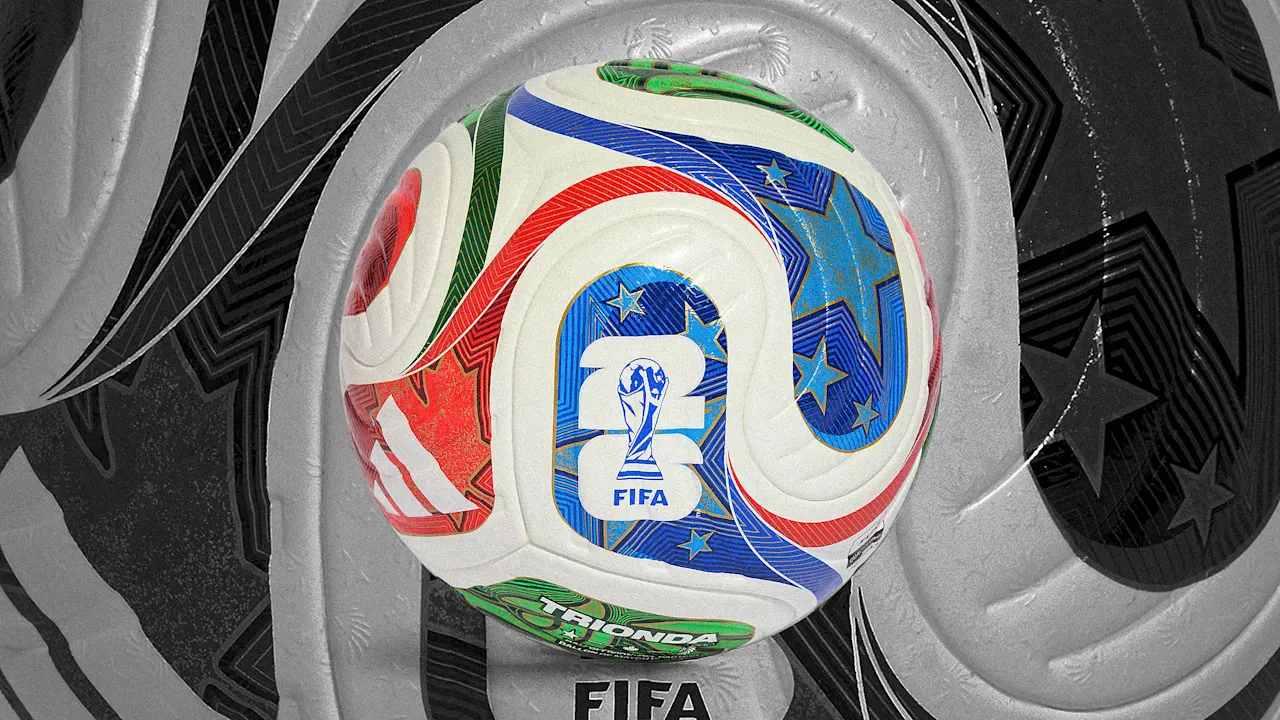
Every four years, the men's FIFA World Cup brings a flurry of constants: the pitch dimensions are fixed, offside calls rely on a raised flag, and referees blow a whistle to signal the end of play. Yet one critical element is intentionally reinvented each tournament: the match ball. Since 1970, Adidas has been the official supplier, and for the 2026 World Cup, they have introduced the Trionda. This ball not only celebrates the three host countries—Canada, the United States, and Mexico—but also marks a historic first: a four-panel design in men's World Cup history.
The Science Behind the Ball: Aerodynamics on Trial
For the past two decades, engineering teams in Japan and England have rigorously tested each new World Cup ball, studying how it behaves in flight. Their process begins with wind tunnel experiments that measure drag, side forces, and lift. These data points feed into trajectory simulations that predict the ball’s real-world behavior—sudden dips, unexpected swerves, or stable flight paths.
While the research may sound purely academic, the results have tangible consequences. A ball’s aerodynamic profile can decide whether a striker scores or misses, whether a goalkeeper makes a spectacular save or a costly blunder, and whether fans celebrate or mourn. At the World Cup, the ball is the most important piece of equipment in the world's most popular sport.
Wind Tunnel Insights
During testing, engineers place the ball in a controlled airflow to measure how it interacts with the surrounding air. The surface texture—number of panels, seam depth, and overall smoothness—dramatically affects the aerodynamic forces. For instance, a ball with many panels may produce more consistent flight, while a very smooth ball can become unpredictable, as was starkly demonstrated by the 2010 Jabulani.
The Evolution of World Cup Match Balls
The history of World Cup balls is a story of continuous innovation. In 1930, the final match used two different leather balls: Argentina's Tiento in the first half and Uruguay's T-Model in the second. Both were hand-sewn, multi-paneled, and required a bladder opening to be tied off and tucked under laces. In wet conditions, the leather absorbed water, making the ball heavier and more erratic.
Over the decades, materials and construction evolved. The move from leather to synthetic materials, the introduction of thermally bonded panels, and the reduction in total panel count all aimed to improve consistency and durability. The 2006 Teamgeist featured 14 panels, the 2010 Jabulani had 8, and the 2014 Brazuca used 6. The Trionda now takes that trend to its logical extreme with just four panels.
From Many to Few: The Panel Revolution
Fewer panels reduce seams, which can create a smoother surface. But smoothness is a double-edged sword: too many seams can cause a ‘knuckleball’ effect, while a perfectly smooth ball may lack the turbulence needed to stabilize its flight. The Jabulani's erratic behavior—characterized by sudden dips and swerves—was largely attributed to its smooth, eight-panel construction. That ball became notorious among goalkeepers and forced a rethink for subsequent designs.
The 2026 Trionda: Celebrating Three Nations with Four Panels
Unveiled in fall 2025, the Trionda immediately draws attention with its vibrant red, blue, and green graphics. These colors correspond to the flags of Canada, the United States, and Mexico. Embedded motifs—a maple leaf, a star, and an eagle—further honor each host country. Yet the most striking feature is the four-panel construction, the lowest panel count ever used in a men's World Cup ball.
With so few panels, the Trionda inevitably invites comparisons to the Jabulani. Has Adidas made the ball too smooth again? According to the engineering team, extensive wind tunnel tests and simulations suggest otherwise. The Trionda’s seam design and surface texture have been carefully optimized to produce predictable flight characteristics, even with fewer panels.
Why Fewer Panels Can Work Well
Modern manufacturing techniques allow for precise control over the ball’s surface. The four panels are not just large patches; they are engineered with micro-textures and strategic seam depths that create the right amount of turbulence. This ensures that the ball doesn't ‘glide’ uncontrollably like the Jabulani but maintains a stable trajectory. Goalkeepers and outfield players alike have reported that the Trionda feels familiar and reliable during early training sessions.
Adidas has learned from past mistakes. The backlash against the Jabulani led to a more conservative approach with the 2014 Brazuca and 2018 Telstar, and that experience has informed the Trionda’s development. The ball has been tested under a variety of conditions—high altitude, wet surfaces, and extreme temperatures—to ensure that it performs consistently across the three host nations' diverse climates.
The Ball That Unites Three Nations
The 2026 World Cup will be a unique tournament, spanning three countries and multiple time zones. The Trionda is designed to be a symbol of unity, both in its appearance and its performance. Whether soaring through the thin air of Mexico City, the humid heat of Houston, or the cold of Toronto, the ball must remain reliable. For players and fans, that reliability is what separates a memorable goal from a regrettable miss.
As the first whistle blows on June 8, 2026, all eyes will be on the pitch—and on the ball. The Trionda carries the weight of history, the lessons of past designs, and the hopes of three host nations. If Adidas has succeeded, the ball will be just another constant in a tournament full of variables. If not, it could become the next Jabulani. Either way, the science and engineering behind it will continue to shape the beautiful game.