Supercomputer Simulations Unlock Dolphins' High-Speed Propulsion Secret
Dolphin Speed Mystery Solved
Japanese researchers have cracked the code behind dolphins' remarkable speed and agility in water using advanced supercomputer simulations. The key lies in how their tail movements generate powerful vortex rings that propel them forward, according to a study published in Physical Review Fluids.
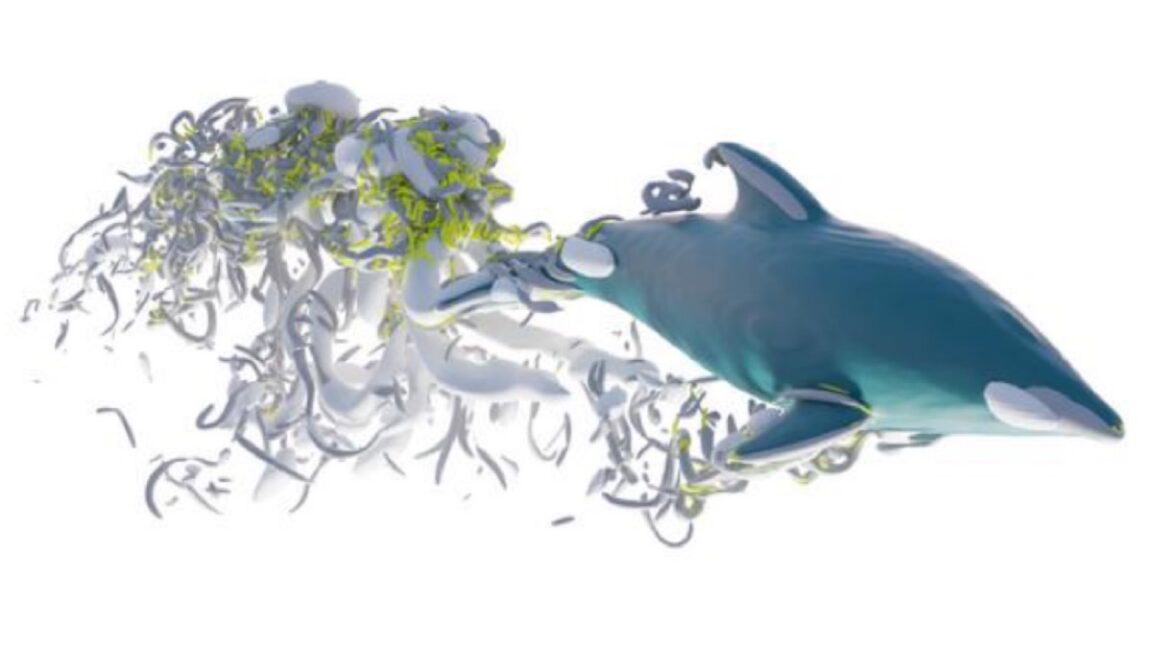
Lead author Dr. Koji Yamamoto of Osaka University stated, 'Our simulations reveal that the initial large vortex rings created by the dolphin's tail kick are the primary drivers of thrust. The subsequent smaller vortices do not aid forward motion.' The team used high-resolution computational fluid dynamics to analyze the intricate flow patterns produced by dolphin flukes.
The findings resolve a long-standing debate about the role of vortices in dolphin swimming, showing that size matters more than number. The large rings efficiently convert muscle power into forward thrust, while smaller eddies dissipate energy without contributing to speed.
Background
Dolphins are among the fastest marine mammals, reaching speeds of up to 25 miles per hour, but the physics behind their propulsion remained unclear. Previous research focused on factors like skin elasticity and tail shape, but none fully explained their efficiency.
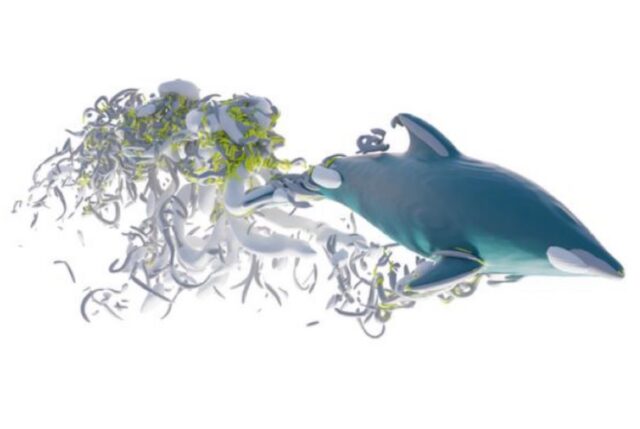
The Osaka team simulated a dolphin's tail flapping motion using a computational model that mimicked the animal's anatomy and movement. They discovered that the initial downstroke and upstroke generate a single large vortex ring that provides the main forward force. As the tail oscillates further, this ring breaks into many smaller vortices that do not contribute to propulsion—a finding that contradicts earlier assumptions.
What This Means
The study has immediate implications for the design of underwater vehicles and robotic fish. Engineers may now prioritize generating large vortex rings rather than minimizing turbulence, potentially leading to more efficient propulsion systems.
Dr. Yamamoto added, 'Our work provides a blueprint for bio-inspired propulsion that could revolutionize unmanned underwater vehicles. By tuning the tail motion to create strong, large vortices, we can achieve higher speeds with less energy.'
Additionally, conservation biologists can use these insights to assess how human activity such as noise pollution might disrupt the fluid mechanics essential for dolphin hunting and communication.
Further research will test these simulations with live dolphins in controlled environments to validate the hydrodynamic model. The team also plans to explore how dolphins adjust their kick frequency and amplitude in different swimming conditions.